
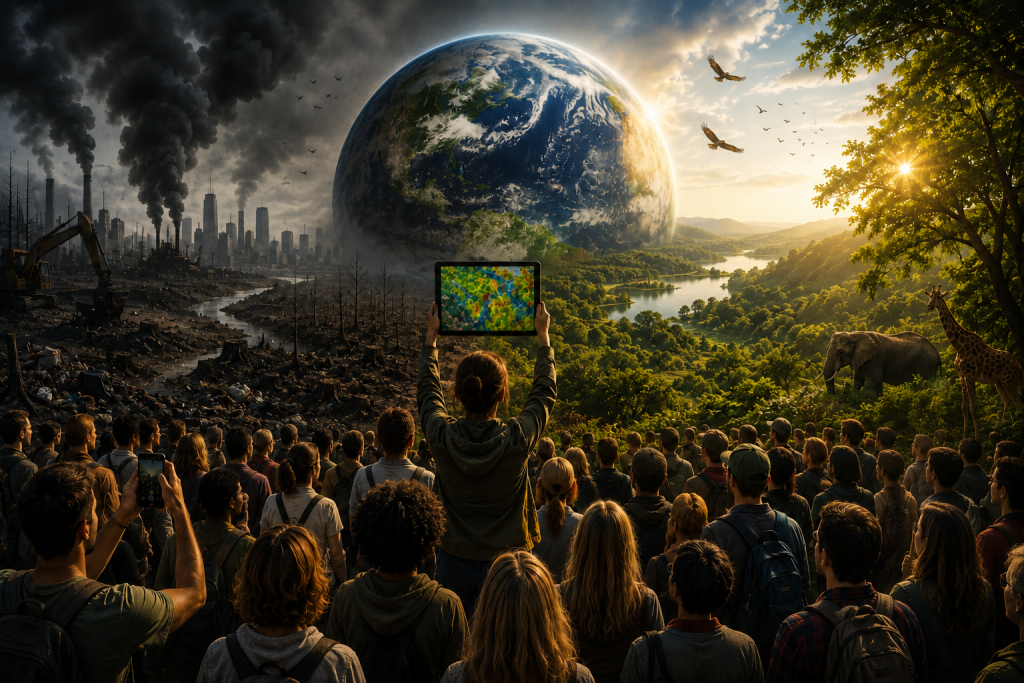

This may sound provocative, but hear me out
Earlier in the year I attended and spoke at a conservation forum. There were many excellent speakers and the topics were of conservation importance. Most of the attendees were from the conservation world, be it nature reserve managers, conservation committees, environmental companies, environmental and conservation government institutions and university students and lecturers. You know, the usual nature-loving science fundies that make up this sector of society.
I have attended and spoken at many of these types of forums over my career and there are a number of things that always stand out for me at these 3 – 4 day events and unfortunately they are not necessarily beneficial for the environment and conservation, the very thing we are all there to look after.
Firstly, we are preaching to the choir. A room full of conservation scientists, managers, academics and enthusiasts talking about topics they understand well does not help change the deep challenges we are facing regarding the environment and its well-being. It’s a bit like your personal internet space, an echo chamber. We talk about all the problems and the amazing findings that have been made but that’s where it ends, in the room after the last cup of coffee has been drunk on the last day of the conference. The rest of the world and its people at large never hear about the problems or the solutions that have been discovered.
Secondly, it’s often too complicated. Academics speak endlessly about their ground breaking new discoveries (which I am sad to say many of which are not new or ground-breaking – if you took 5 minutes during one of the very complicated statistics monologues and Googled similar projects around the world, someone in Bangladesh, Cambodia or Australia’s Gold Coast has already done this study eons ago, probably in 2015 or earlier). Most bright minds in the audience love this sort of stuff and so do I. But it is often a very complicated word salad that defeats the purpose of sharing knowledge. The rest of the world and its people at large will never hear about the project or paper and even if they did, they wouldn’t read it or understand it because the important info is locked up in fancy pants scientific papers and unnecessarily complicated word waffle in some Nature journal. I get it, academia wants lots of papers pumped out for funding reasons and therefore people are also very cagey about sharing too much of their precious research openly. A bit like Gollum obsessing over The Ring in some shitty cave somewhere beneath the Misty Mountains. “A bit harsh there mate?” you might say. No, I don’t think so, the world at large needs this important info, share it far and wide and simply not for the love of money or prestige amongst a select group.
Thirdly, when it comes to landscape management topics, the data and references are often old, often 6 or 7 years old and sometimes 20 years or more! A lot happens in landscapes over just a few months and most of those changes go unnoticed because landscapes are large and the changes are small so it is hard to keep up to date with it all. Until now we have only been able to notice changes in landscape when it has become drastic enough to notice. So naturally it is slow going, but we do have solutions for this now (you know what I am going to say here of course). The rest of the world and its people at large never notice, hear about or get the opportunity to fully grasp and understand what to look for, the subtle signs that changes are happening for good or bad in their environment
As fun and interesting as these functions are for me and other conservationists, in my opinion they are ultimately a waste of time as they don’t serve the greater purpose of caring for life on Earth in all its glorious complexity. Why? Because the rest of the world simply isn’t exposed to this knowledge in a way that truly connects. We need a mass mindset shift.
I’m not talking about starting some over-the-top Greenpeace movement or encouraging Greta Thunberg-style emotional rampaging and virtue-signalling on social media. That achieves very little. In many cases, it makes things worse by dividing people through emotion and opinion. And opinions are like arseholes—everyone has one. They don’t unite people around the world behind a common understanding of the problem or inspire practical action.
Instead, the spotlight shifts away from the issue itself and onto personalities, identity politics, and rage-bait designed to garner clicks. The conversation becomes about the people arguing instead of the problem they’re supposedly trying to solve.
I’ll prove it right now. The moment I mentioned Greta’s name, your mind probably jumped to an angry teenager shouting, “How dare you!”, surrounded by a wall of camera flashes. It probably didn’t jump to the environmental cost of mining and processing lithium for your solar panels or electric vehicle. You probably didn’t think about removing alien invasive plants from your local neighbourhood. You didn’t think about how buying an Australian Sugar Glider for your 10-year-old in Norway because it’s cute could have serious consequences for both the species itself and an ecosystem on the other side of the world. Some of you are probably already composing an angry reply because I mentioned Greta Thunberg. That’s exactly my point. Your attention was immediately drawn to the people, not the message. Imagine if conservation science could capture attention that easily?
Real change starts when enough people have enough information. Our purpose as conservation scientists, ie researchers studying the only known biological system in the universe, is to get that knowledge out there. It’s a challenge. A really big one.
I propose a new tactic: create articles that everyone can understand and enjoy. Throw some humour in there. Make it a story, like some wild Tolkien adventure that captures people’s attention. Make it fun, make it alarming. People love a good drama with a bit of shock and horror thrown in.
And most importantly, instead of complex stats, use pictures A LOT! As the cliché goes, they speak ten million words. Drone maps present visual information that people can understand at a glance with nothing more than a short, simple caption. The colours and imagery do the rest. “Here, this is the change we see over 2 months and why it’s happening”.
Any car salesman will tell you that most customers buy with their eyes and their emotions, not with spreadsheets, tables, or peak torque graphs buried in some PDF they were emailed a week before they walked into the dealership. We need to do the same. Tell the story. Paint the picture. Start the movement.